
High blood pressure

Get a reading
you can trust.

Follow a short home blood pressure routine, know when to get help, and choose one habit that fits your day.

Chest pain, severe trouble breathing or signs of stroke? Call 911.

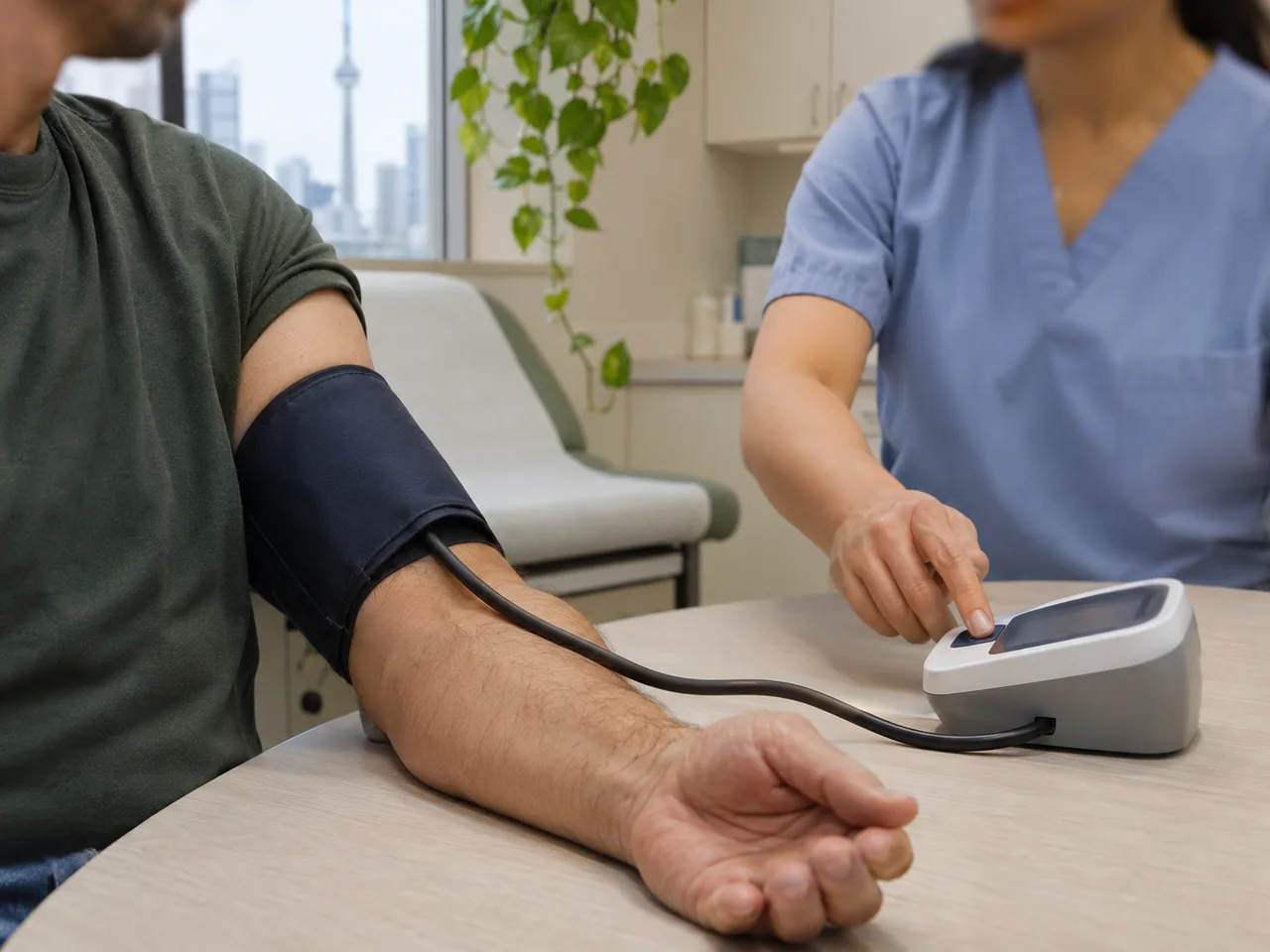
A clinician starts a digital blood pressure monitor attached to a cuff on a patient’s bare upper arm

Home blood pressure tools

Set up, rest and take two readings.

Use this routine for planned home measurements. Bring your monitor and log to a visit if you’d like someone to check your technique.

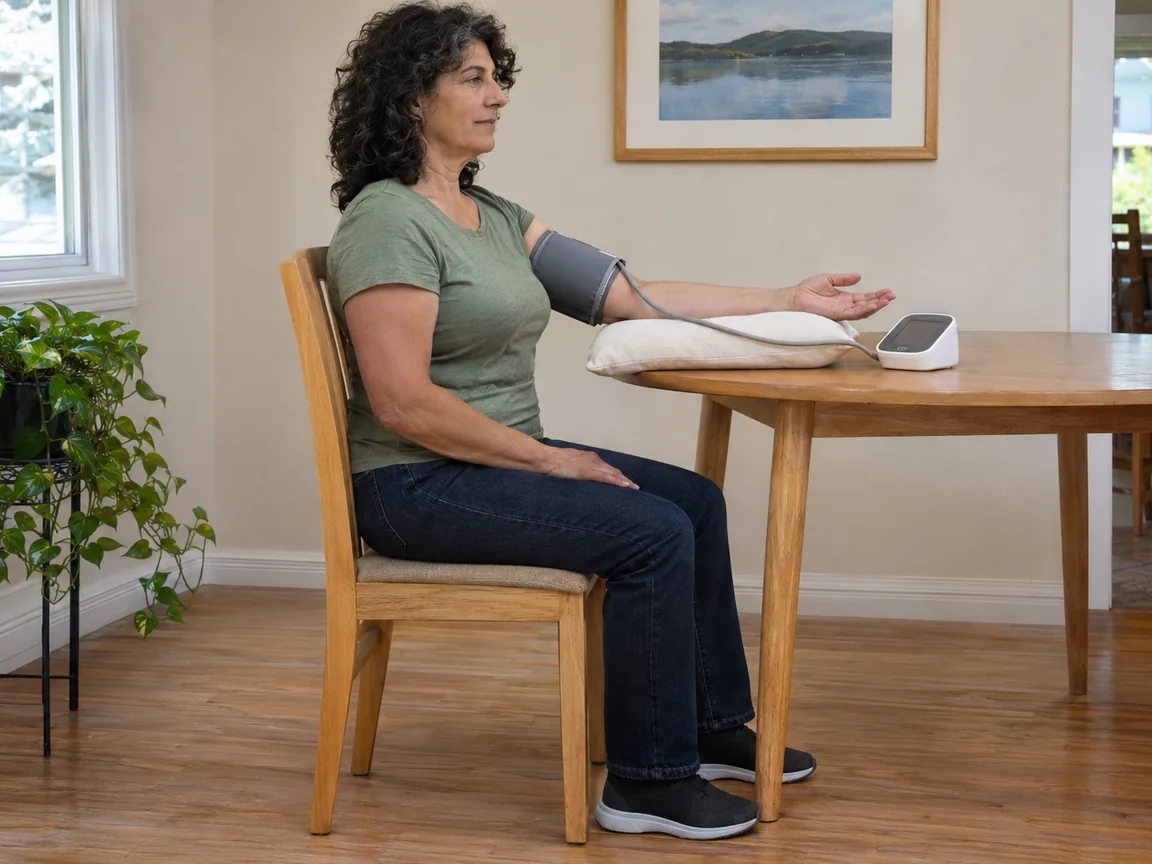
A person sits with uncrossed legs and an upper-arm cuff on bare skin, attached to a digital monitor on the table
Keep your back supported and feet flat. Rest your arm so the cuff is at heart level.

Use a validated upper-arm monitor.

Measure around your upper arm and check that it fits the size range printed on the cuff. Put the cuff on bare skin and follow your device instructions. A pharmacist or clinician can check the fit.

Avoid caffeine, smoking and exercise for 30 minutes beforehand. Use the washroom first if needed.

Find a validated monitor from Hypertension Canada

Sit quietly for five minutes.

Sit with your back supported, feet flat and legs uncrossed. Rest your arm on a table so the cuff is at heart level.

Wait one minute between readings.

Stay seated and keep your arm supported. Keep still and quiet while the cuff inflates. Write down the first result, wait one minute and take the second. Keep both numbers from each reading.

Write down the pattern.

If your clinician asks for a week of readings, a common schedule is two in the morning and two in the evening for seven days. Follow the timing they give you and bring the whole record, including the first day.

Print a seven-day blood pressure log (PDF)

Keep the log handy before you start.

Record the date, time, top and bottom numbers. Add a short note if anything unusual might help explain a reading.

Open the printable log

When to get help

What if the reading is high?

How you feel matters. Use the steps your care team has given you and act promptly if an emergency sign is present.

Emergency signs

Call 911

Call 911 right away for chest pain, severe trouble breathing, collapse, a seizure, or sudden symptoms such as facial droop, one-sided weakness, trouble speaking, confusion or major vision changes. Act even if you haven’t taken a reading.


Very high reading while feeling well

For adults who aren’t pregnant, a top number of 180 or higher or a bottom number of 110 or higher needs prompt attention. Sit quietly and repeat once if you still feel well. If either number stays that high, call your care team now or seek same-day urgent care.

For non-emergency advice on where to go in Ontario, call 811.

HealthLink BC on very high readings

Above the goal your care team gave you

Keep the readings and check them using the usual technique and schedule. If they are repeatedly above your goal, send or bring the log to your care team using the method they’ve given you. Take your medicines as prescribed while you arrange advice.

Daily habits

Make one change you can repeat.

Choose something that fits the food, time, energy and support you have. Try it for a week and see how it feels.

A person mixes vegetables, beans and grains in a bowl

Swap one high-salt food

Try a lower-sodium soup, a no-salt-added canned food, or herbs and lemon in place of some salt. Build meals around foods you already enjoy, such as vegetables, fruit, beans and whole grains. Ask about a DASH-style eating pattern or a dietitian if you want help.

Two people walk together along a park path

Add movement to something you already do

Try a short walk, a roll or seated movement after one meal, at a pace that works for you. Build up gradually or ask your care team for ideas if pain, balance or breathing make movement difficult.

Give medicines a regular cue

Pair your prescription schedule with a routine or reminder. Refill before you run out. If cost, side effects or missed doses are getting in the way, a pharmacist or clinician can help you make a workable plan.

Make room for sleep and support

Tell your team about loud snoring, gasping during sleep or daytime tiredness. Ask for help if you’d like to reduce alcohol or quit smoking. Smoking and nicotine support

Common blood pressure medicines

Know what you take and what to check.

Your clinician considers your readings, heart and kidney health, other medicines and side effects. Some people need more than one type of medicine.

ACE inhibitors or ARBs

Ramipril is an ACE inhibitor and candesartan is an ARB. These groups help blood vessels relax. Your team may check kidney function and potassium. A dry cough can occur with an ACE inhibitor.

Calcium channel blockers

Amlodipine is a common long-acting example that relaxes blood vessels. Tell your care team if you notice ankle swelling or dizziness.

Thiazide-type diuretics

Indapamide is one example. It helps the body remove extra salt and water. Ask when to check blood salts and what to do if you feel light-headed.

Understand your readings

Two numbers, one pattern to review.

Blood pressure changes with activity, stress and how you measure. Your care team uses repeat readings, your health history and how you feel to plan next steps.

What the numbers mean

Top number Systolic

Pressure in your arteries as your heart pumps.

Bottom number Diastolic

Pressure in your arteries between beats, as your heart relaxes.

Canadian primary care guidance

Hypertension Canada’s 2025 guideline defines high blood pressure in adults at a top number of 130 or more or a bottom number of 80 or more, when measured with a validated device under optimal conditions. Your team checks repeated readings to confirm the pattern and sets your treatment goal with you.

Hypertension Canada diagnosis guidance

United States comparison

The American Heart Association and American College of Cardiology use U.S. categories and treatment guidance. They include measurement method, repeat readings and cardiovascular risk.

U.S. 2025 guideline summary

Europe and United Kingdom comparison

European and UK guidelines use their own categories and specify how office, home or ambulatory readings are used.

UK NICE hypertension guidance

Where you measure can change the pattern.

Some people have higher readings in a clinic than at home. Others have higher readings outside the clinic. Home readings or a wearable 24-hour monitor may help clarify what’s happening. Ask which approach your clinician recommends.

An example to discuss

A clinic reading of 136/84 and a home reading of 128/78 are examples of how readings can differ. Bring your log and tell your clinician when and how each set was taken.

Why the pattern matters over time

High blood pressure often has no symptoms. Persistently high readings can affect your heart, brain, kidneys, eyes and blood vessels.

Heart

High pressure makes the heart work harder and can increase the risk of heart attack and heart failure.

Brain

Blood vessel damage can raise the risk of stroke. Anyone with sudden stroke signs needs urgent help.

Kidneys

Kidney disease can affect blood pressure, and high pressure can damage kidneys. Ask whether blood or urine tests are useful for you.

Eyes

Persistently high blood pressure can damage small blood vessels in the eyes. Tell your clinician about changes in vision.

Arteries

High blood pressure can damage arteries over time. Your care team considers other risks when planning prevention.

Pregnancy

High blood pressure during pregnancy and after delivery needs a plan from your maternity team.

Bring the rest of your heart health into the visit.

Ask how your readings fit with cholesterol, diabetes, kidney health, smoking, sleep and movement. Diagnosis, heart risk, when to start medication and your personal goal each come up at different points in a visit.

Explore cardiovascular prevention

Watch and learn

Short videos from hospitals and health organizations I trust. Watch at your own pace, and bring your questions to your next visit.

Video thumbnail for How to measure your blood pressure with a home monitor

How to measure your blood pressure with a home monitor

University of Ottawa Heart Institute Canadian source

Short video

Tips from a hospital hypertension clinic for accurate readings at home.

Watch on YouTube
Video thumbnail for How to measure your own blood pressure

How to measure your own blood pressure

Heart & Stroke Canadian source

Short video

Simple steps to get an accurate blood pressure reading.

Watch on YouTube

These videos are for general education and do not replace advice from your own doctor. If you have urgent symptoms, call 911 or go to the nearest emergency department.

Blood pressure care in Toronto

Find the help you need next.

Bring your home log to the visit. Ask whether the monitor, test or service has its own eligibility or fee.

Free advice through Health811

Ontario’s free navigation service can help you reach a nurse for non-emergency advice or a registered dietitian for nutrition questions.

Call 811 Health811 online

OHIP-covered primary care

If you’re an Albany patient, book a follow-up with your family doctor at 807 Broadview Ave. Eligible patients can use OHIP for medically necessary physician visits. Ask about checking your cuff or arranging a wearable monitor.

Plan a visit at Albany

Sunnybrook Hypertension Clinic

The public hospital clinic accepts referrals for selected patients, including those with difficult-to-control or secondary hypertension. Ask your doctor whether a referral fits your situation.

Sunnybrook referral information

Service links checked .

Prepare for a visit

Bring one question you want to ask.

Choose the questions that feel most useful.

Choose your questions

What to bring

Bring your monitor and cuff if you want the fit checked, your reading log, a list of medicines and supplements, and a short note about symptoms or side effects.