
Back to Plan your visit
Module 15 · Endocrine health

Understanding hypothyroidism

Hypothyroidism means the thyroid is not making enough hormone for the body’s needs. Symptoms overlap with many other concerns, so the story, examination and thyroid blood tests all matter.

General information only · No diagnosis

Clinically reviewed by Dr. Eduardo Jacques · 20 November 2026

A calm starting point

Thyroid hormones influence energy use, temperature regulation, heart, brain, muscles and many other organs. Hypothyroidism can be temporary, persistent or related to another condition.

Primary hypothyroidism

The thyroid gland itself is not producing enough hormone. Hashimoto’s thyroiditis is a common autoimmune cause; surgery, radioiodine, radiation, thyroiditis and some medicines can also contribute.

Central hypothyroidism

A less common problem involving the pituitary or hypothalamus can affect the signals that tell the thyroid what to do. In that situation, TSH alone may not tell the whole story.

Symptoms are not a diagnosis. Feeling tired, cold, low or constipated can happen for many reasons. A thyroid blood test and clinical context are needed to interpret symptoms.
Simplified thyroid axisThe pituitary sends TSH to the thyroid, which produces T4. Free T4 circulates to tissues and feeds back to the pituitary.PituitaryTSH signalThyroidT4 productionTissuesFree T4 effects
This simplified diagram is educational. TSH and free T4 patterns need clinical interpretation; they are not a personal diagnosis or target.

Symptoms and common presentations

Symptoms often develop gradually and may be mild. Not everyone has the same pattern, and many symptoms have non-thyroid causes.

Energy and thinking

  • Fatigue, weakness or reduced stamina
  • Slower thinking or concentration difficulty
  • Low mood or feeling slowed down

Body changes

  • Feeling unusually cold
  • Dry skin, brittle hair or hair loss
  • Constipation or muscle discomfort

Periods and weight

  • Heavy or irregular menstrual bleeding
  • Weight change or difficulty interpreting weight change
  • Changes that may overlap with menopause, sleep or medication effects
Persistent symptoms deserve a broad conversation. A normal thyroid test does not make symptoms imaginary, and an abnormal test does not prove that every symptom comes from the thyroid.

Thyroid symptoms in women

The illustration compares possible symptoms of an underactive and overactive thyroid. A TSH blood test is often the first step. Depending on your symptoms and results, your clinician may also check free T4 or order other tests. How clinicians assess thyroid symptoms
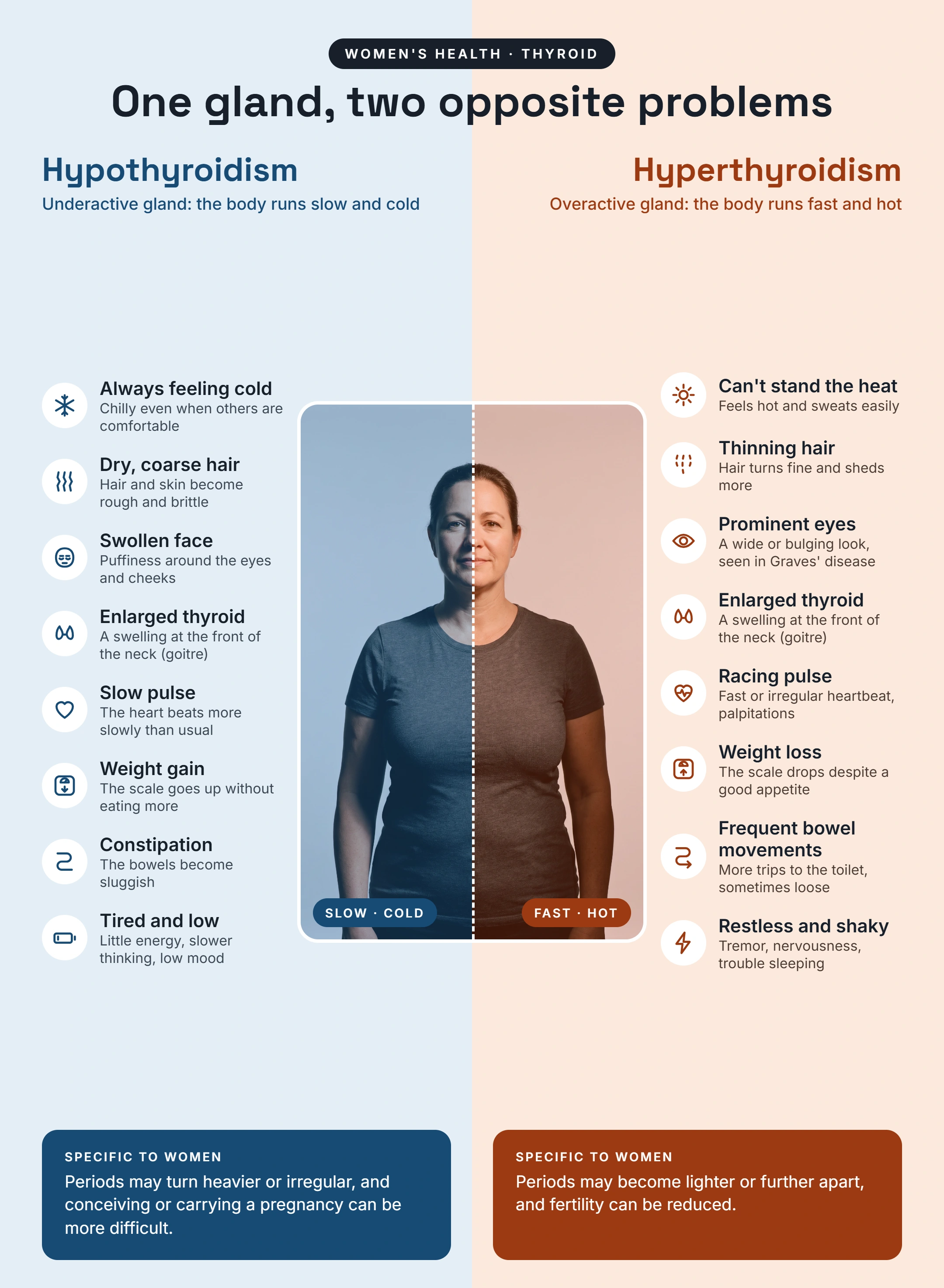
Read the comparison as text
Underactive thyroid (hypothyroidism)
Possible symptoms include feeling cold, dry skin or coarse hair, facial puffiness, a slower pulse, weight gain, constipation, fatigue, low mood and heavier or irregular periods.
Overactive thyroid (hyperthyroidism)
Possible symptoms include feeling hot or sweating more, thinning hair, a fast or irregular heartbeat, weight loss, more frequent bowel movements, trembling, trouble sleeping and lighter or less frequent periods. Prominent eyes can occur with Graves’ disease.
Changes that can happen with either condition
An enlarged thyroid (goitre) and difficulties with fertility can occur with either condition.

Open the full-size illustration

Illustration of possible thyroid symptoms in women, with a blue side for an underactive thyroid and an orange side for an overactive thyroid.

How clinicians assess hypothyroidism

Testing is chosen for the clinical question. A single number should be interpreted with the laboratory reference interval, symptoms, medicines and health context.

1 · StorySymptoms, timeline, family and autoimmune history, pregnancy plans and medicines.
2 · ExaminationPulse, skin, reflexes, neck and thyroid, general and neurological clues.
3 · Blood testsTSH and free T4 are interpreted together when indicated.
4 · Follow-upDiscuss cause, treatment classes, interactions, monitoring and referral.

TSH and free T4

For suspected primary thyroid dysfunction, TSH is often the first test. If TSH is outside the reference range, free T4 may help characterize the pattern. If pituitary disease is possible, TSH and free T4 may be considered together.

Antibodies and repeat testing

Thyroid peroxidase antibodies may help discuss autoimmune thyroid disease in selected situations. A mildly abnormal result may need confirmation, and biotin supplements can interfere with some assays. Ask how to prepare for testing.

Screening is different from diagnosis. Canadian guidance recommends against routine screening of asymptomatic, nonpregnant adults without risk factors. That does not apply when symptoms, known thyroid disease, relevant medicines, pregnancy or other risk factors are present.

Causes, contributors and related conditions

A clinician may consider more than one explanation and may distinguish primary thyroid disease from other conditions that can look similar.

Possible thyroid-related causes

  • Hashimoto’s autoimmune thyroiditis
  • Thyroid surgery, radioiodine or neck radiation
  • Postpartum or other thyroiditis
  • Lithium, amiodarone or selected cancer medicines
  • Iodine deficiency or excess, depending on context
  • Pituitary or hypothalamic disease

Related or alternative explanations

  • Anemia, iron deficiency or vitamin deficiency
  • Sleep disorders, depression, anxiety or burnout
  • Menopause, pregnancy or postpartum changes
  • Diabetes, kidney or liver disease
  • Medication effects or non-thyroidal illness
  • Other endocrine or inflammatory conditions

Life stages and context

Age, pregnancy, fertility, postpartum changes and other health conditions can change how thyroid tests and treatment discussions are approached.

Pregnancy, fertility and postpartum

Tell your clinician if you are pregnant, trying to conceive or recently gave birth. Thyroid requirements and testing plans can change, and postpartum thyroiditis may move through phases. Do not change a medicine without a clinician’s advice.

Children and teens

Possible clues include slowed growth, school or concentration changes, constipation, cold intolerance or delayed puberty. Children’s reference ranges and follow-up needs differ from adults.

Older adults

Symptoms may be subtle or overlap with medication effects and other health conditions. Clinicians may consider frailty, heart health, bone health and the risks of over-treatment.

Mental health, sleep and substances

Low mood, anxiety, poor sleep, alcohol or other substances can affect energy and concentration. These are relevant, non-judgmental parts of a complete assessment.

Practical preparation and self-management

Use this page to prepare for a conversation, not to self-diagnose or adjust treatment.

Bring a useful timeline

  • When symptoms began and what changed
  • Sleep, mood, temperature sensitivity, bowel changes and menstrual pattern
  • Pregnancy, fertility or postpartum timing when relevant
  • Past thyroid tests, surgery, radioiodine or neck radiation

Review medicines and supplements

  • Prescription, over-the-counter and natural products
  • Biotin-containing hair, nail or multivitamin products
  • Calcium, iron, antacids or acid-suppressing medicines
  • Lithium, amiodarone or cancer treatments

Private visit-preparation checklist

This checklist stays in memory and resets when the page reloads. Do not enter personal health information.

Medication and supplement interactions as discussion topics

Do not start, stop or change thyroid treatment based on this page. A clinician or pharmacist can explain the safest plan for your situation.

Thyroid hormone replacement

Levothyroxine is a thyroid-hormone replacement class used for many people with primary hypothyroidism. The product, timing, interactions and monitoring plan are individualized.

Other thyroid preparations

Liothyronine or desiccated thyroid products are not routine first-line choices in many guidelines. Ask what evidence and safety considerations apply before considering any option.

Absorption and interactions

Calcium, iron, antacids, acid-suppressing medicines, food and some supplements can affect absorption. Biotin can interfere with laboratory assays. Ask how to separate or pause products safely.

Red flags and when to seek urgent help

Call 911 or go to an emergency department for a medical emergency.

Possible severe underactive-thyroid emergency

  • Extreme drowsiness, confusion, unusual behaviour or loss of consciousness
  • Severe weakness with difficulty breathing or very low body temperature
  • Rapidly worsening illness in someone known to have severe untreated hypothyroidism

Other urgent symptoms

  • New severe chest pain, fainting, severe shortness of breath or a very fast or irregular heartbeat
  • A rapidly enlarging neck swelling, trouble breathing or inability to swallow
  • New neurologic symptoms such as weakness, seizure or severe confusion
This page cannot assess urgency for you. For non-emergency Ontario health information, call Health811 at 811. For an emergency, call 911.

Questions to ask Dr. Eduardo Jacques

  • Could my symptoms have a thyroid and a non-thyroid explanation?
  • What do my TSH and free T4 results mean together?
  • Would repeat testing or thyroid antibodies add useful information?
  • Could biotin, another supplement or a medicine affect the results?
  • Does my history suggest Hashimoto’s, thyroiditis, pituitary disease or another cause?
  • Which treatment classes should we discuss, and what monitoring would be needed?
  • How should calcium, iron, antacids or other medicines be handled?
  • How could pregnancy, fertility or breastfeeding change the plan?
  • When might an endocrinology referral be useful?
  • Which symptoms should prompt urgent care, and when should we review the plan?

Watch and learn

Short videos from hospitals and health organizations I trust. Watch at your own pace, and bring your questions to your next visit.

Video thumbnail for Hypothyroidism: Mayo Clinic Radio

Hypothyroidism: Mayo Clinic Radio

Mayo Clinic U.S. source

Video

An endocrinologist discusses how an underactive thyroid is diagnosed and treated.

Watch on YouTube

Some details, such as drug names and coverage, may differ in Ontario.

These videos are for general education and do not replace advice from your own doctor. If you have urgent symptoms, call 911 or go to the nearest emergency department.

What to bring

  • Medication, supplement and allergy list
  • Biotin, calcium, iron, antacid or acid-suppressing product details
  • Recent thyroid results, imaging or specialist letters, if available
  • A short symptom, menstrual, pregnancy or postpartum timeline
  • Past thyroid surgery, radioiodine or neck-radiation history
  • Family or autoimmune history you want to discuss
  • One or two appointment goals
  • Interpreter, accessibility or support-person needs

Care and coverage in Ontario

Eligibility, wait times and costs vary. Confirm the exact service, referral requirement and fee directly with the clinic, hospital, laboratory, pharmacist or program.

What OHIP-insured care may include

OHIP generally covers medically necessary insured physician services and insured hospital services. A thyroid assessment may involve a primary-care visit, medically necessary laboratory testing or specialist assessment, depending on the clinical situation.

What may be outside OHIP

Some private laboratory testing, supplements, forms, devices, allied-health visits and services outside insured physician or hospital care may be privately paid, employer-insured or program-dependent. Do not assume a service is covered.

Medication pathways

Prescription medicines outside hospital are generally not covered by OHIP. ODB, OHIP+, Trillium, Exceptional Access and private plans have different eligibility and formulary rules. Ask a pharmacist to confirm the current pathway.

Toronto and Ontario navigation

  • Health811: call 811 for non-emergency nurse advice and service navigation.
  • What OHIP covers: review current insured-service information.
  • Ontario medication coverage: check ODB, OHIP+, Trillium and related pathways.
  • Toronto hospitals, community health centres and endocrinology clinics may have different referral and access rules.

Trusted sources

Canadian sources are listed first. U.S., UK and European sources supplement them. Links were opened and checked on 20 November 2026; update dates and access rules can change.

Canadian Task Force · Asymptomatic thyroid dysfunctionCanada · Preventive-care guideline · screening boundaries and risk factors.
Canadian Task Force · Clinician FAQCanada · Guideline companion PDF · testing and overdiagnosis explanation.
CMAJ / Canadian Task Force · Screening guideline citationCanada · Peer-reviewed practice guideline record.
HealthLink BC · HypothyroidismCanada · Government patient education · symptoms, causes, testing and urgent signs.
HealthLink BC · Thyroid hormone testsCanada · Government patient education · TSH and free T4 context.
Thyroid Foundation of Canada · Thyroid information packageCanada · Patient and clinician education · thyroid testing and terminology.
Government of Canada · Postpartum careCanada · National maternity guidance · postpartum thyroid dysfunction and Canadian pathway limitations.
American Thyroid Association · Adult hypothyroidismUnited States · Patient education · symptoms, causes and TSH/free T4 diagnosis.
American Thyroid Association · Thyroid hormone treatmentUnited States · Patient education · replacement treatment, monitoring and dose-safety concepts.
American Thyroid Association · Pregnancy guideline resourceUnited States · Professional guideline overview · pregnancy and postpartum considerations.
USPSTF · Thyroid dysfunction screeningUnited States · Preventive-care recommendation · uncertainty, overdiagnosis and repeat testing.
NICE NG145 · Thyroid disease: assessment and managementUnited Kingdom · Clinical guideline · TSH/free T4 testing, biotin, treatment and monitoring. Automated recommendations endpoint may restrict access.
NHS · Underactive thyroidUnited Kingdom · Patient education · symptoms, diagnosis, treatment, pregnancy and emergency context.
European Thyroid Association · Levothyroxine monotherapy guidelineEurope · Practice guideline record · preparation and monitoring principles.
American Thyroid Association · Hypothyroidism bookletUnited States · Recognized patient reference PDF · diagnosis, treatment and interaction education.

Printable resources

These original PDFs were clinically reviewed for publication. They include selectable text, source links, version information and no PHI fields or uploads.

Patient education guideSymptoms, TSH/free T4, causes, treatment discussions and Ontario care.
Clinically reviewed · v1.0
Questions for a clinicianPrompt sheet for testing, interactions, pregnancy and follow-up.
Clinically reviewed · v1.0
Thyroid test trackerPrivate, non-PHI worksheet for recording test names, dates and questions.
Clinically reviewed · v1.0
Ontario and Toronto resourcesCoverage, medication pathways and Health811 navigation.
Clinically reviewed · v1.0
Topic reference guideCanadian-first source map and limitations.
Clinically reviewed · v1.0

Review status

Last research verification
20 November 2026
Medical-review status
Clinically reviewed for publication
Clinical reviewer
Dr. Eduardo Jacques
Publication state
Published