
Some days are quieter
Symptoms may change with exercise, infections, allergens, smoke, weather, work exposures, stress or time of day.
Asthma and daily life
Notice when breathing changes, what might set symptoms off, and what helps. Bring a short note to review with your care team.
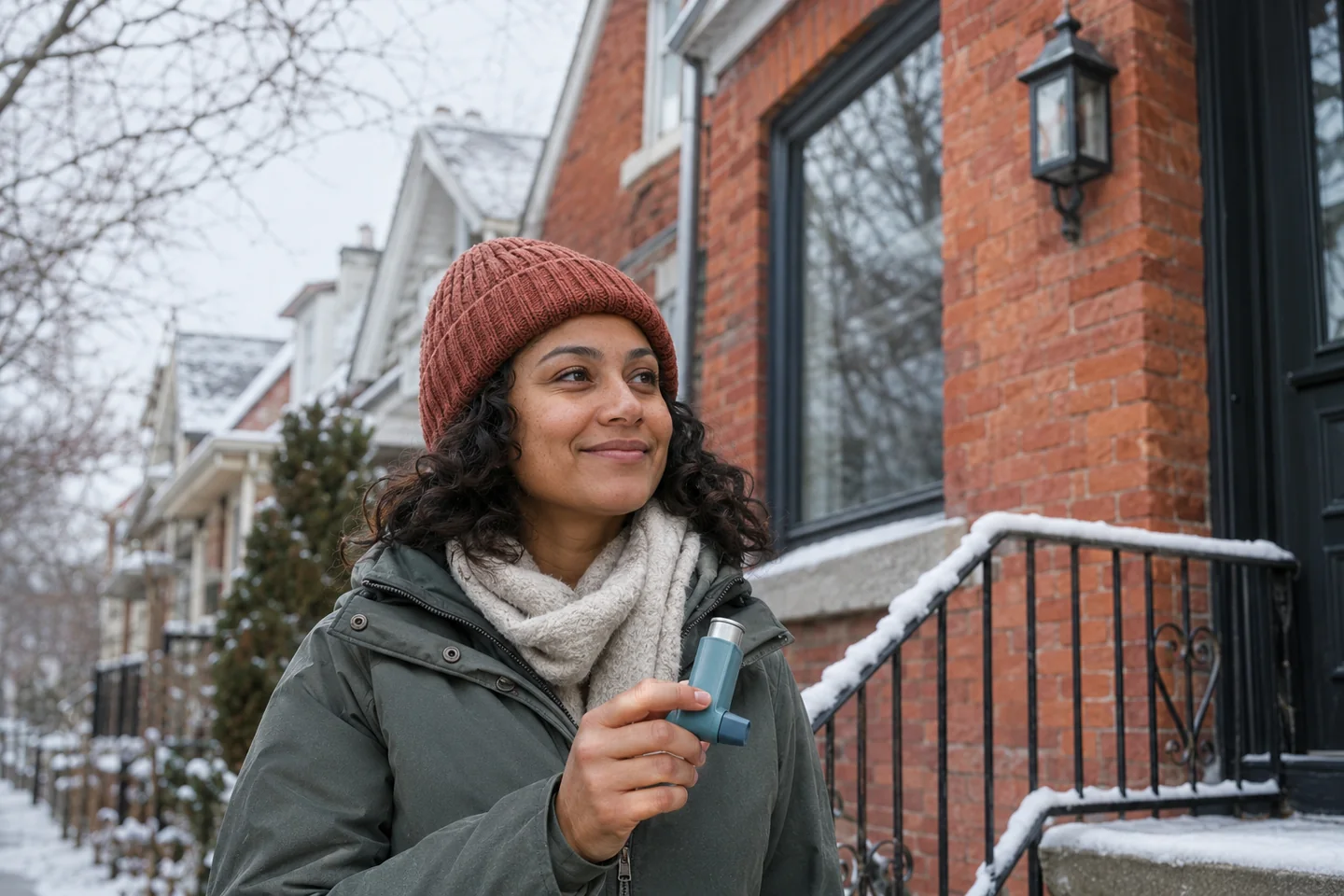
Asthma is a health condition involving variable airway symptoms and airflow limitation. A webpage cannot diagnose asthma or tell you which medicine is right for you.
Symptoms may change with exercise, infections, allergens, smoke, weather, work exposures, stress or time of day.
Spirometry and other lung-function tests can help confirm or question an asthma diagnosis when clinically appropriate.
Night waking, activity limits, increasing reliever use or flare-ups may signal a need for clinical review.
Cough, wheeze, chest tightness and shortness of breath can come and go. Think about one recent episode, what came before it, how long it lasted, and what helped.
Build my visit note
Canadian Health Survey on Children and Youth
6.4% of children and youth aged 1 to 17 across the ten provinces had a reported asthma diagnosis in 2023.
Short videos from hospitals and health organizations I trust. Watch at your own pace, and bring your questions to your next visit.

Canadian Lung Association Canadian source
Short video
A step-by-step demonstration of correct puffer technique.
Watch on YouTube
Canadian Lung Association Canadian source
Short video
Shows what a spacer does and how to use one with your puffer.
Watch on YouTubeThese videos are for general education and do not replace advice from your own doctor. If you have urgent symptoms, call 911 or go to the nearest emergency department.
Prepare for a visit
Choose what you’ve noticed for yourself or someone you care for. Your choices stay in this tab until reload. Copy or print the note when you’re ready.
Note when it happened, what helped, and how often you needed your reliever. Bring your inhalers and written action plan if you have them.
See what else to bringCanadian and Ontario guidance emphasizes confirming asthma as objectively as possible while considering age, symptoms, access and alternative explanations.
Discuss symptoms, triggers, night waking, exercise, infections, allergies, smoking or vaping, work exposures, past flare-ups and family history. The clinician also considers other possible causes.
Spirometry measures airflow before and after a bronchodilator. In Ontario, adults suspected of having asthma are directed toward spirometry and, when needed, additional lung-function testing.
Children aged 6 and older and adolescents may complete spirometry when clinically suspected of having asthma. Younger children may be assessed from documented patterns, response and the absence of a more likely alternative diagnosis.
If results are unclear, the next step may include repeat testing, peak-flow monitoring, FeNO or specialist referral. A diagnosis should be documented with the evidence supporting it.
The opening leaves room for air to move.
Muscle tightening, swelling and mucus can reduce that space.
Simplified cross-sections showing how an asthma flare can narrow an airway.
Different devices require different steps. Bring the actual inhaler or a demonstration device if your clinician asks. Do not change the prescribed plan based on this page.
0 of 6 technique points selected
Asthma Canada and Ontario Health support written, personalized asthma action plans reviewed with a clinician. This website does not create or personalize one.

Bring your inhalers, spacer if you use one, and any action plan you already have. Ask your care team to check your technique and explain what to do if symptoms change.
Know what your day-to-day control looks like and which regular treatments your clinician has prescribed.
Recognize worsening symptoms or increased reliever use and follow the specific steps written by your clinician.
Use the emergency instructions in your plan and seek urgent help when severe symptoms or poor response are present.
Arrange follow-up to review triggers, technique, treatment, vaccination and whether the plan still fits.
Support is more than medication. A clinician can help connect symptoms with the environment, activity, sleep and access factors around you.
Smoke, vaping aerosol, allergens, cold air, infections, workplace exposures and indoor conditions may affect symptoms. Avoidance should be realistic and not isolate you from daily life.
Regular activity is generally valuable. Exercise-related symptoms can be assessed so that activity remains safe and enjoyable rather than automatically avoided.
Smoking cessation and reducing exposure to second-hand smoke can support lung health. Vaping is not risk-free, and advice should be individualized.
Nasal allergies and other upper-airway symptoms can affect breathing comfort. Ask whether allergy or rhinitis care should be part of the plan.
Ask which vaccines are relevant to your age, health conditions, pregnancy status and current Ontario recommendations. Do not assume one schedule applies to everyone.
Symptoms, testing, device choice and treatment discussions vary across the lifespan. Pregnancy or pregnancy potential should be discussed confidentially with a clinician.
Call 911 immediately if breathing trouble is severe or rapidly worsening, you cannot speak in full sentences, your lips look blue or grey, or you collapse, become very drowsy or confused, have severe chest pain, or get little relief from the emergency steps in your plan.
Follow your written action plan if you have one and seek urgent assessment when symptoms are severe or worsening.
For non-emergency nurse advice in Ontario, call Health811 at 811.
Coverage depends on the service, eligibility, provider, program and medication plan. Confirm current details before travelling or booking.
Ontario Health quality standard for people aged 16 and older.
Open Ontario HealthOntario Health quality standard for children and adolescents.
Open pediatric standardToronto specialist service information. Referral, eligibility and coverage must be confirmed directly.
Open UHN informationFree nurse advice and Ontario service navigation. Not an emergency service.
Open Health811Original Albany PDFs will be created only after clinical review. The links below are existing reference resources.
Official Canadian action-plan education and preparation.
Open Asthma CanadaDevice-specific technique education and spacer discussion.
Open technique resourceCanadian Lung Health education and action-plan resources.
Open Lung Health guidanceOntario Health standard for community asthma care.
Open reference PDFCanada is the primary context. United Kingdom, United States and international sources are comparison references, not automatic Ontario rules.
Canadian asthma guideline library and focused update.
Open CTS guidelinesDiagnosis, control, action plans and community care for adults 16 and older.
Open Ontario standardDiagnosis and management for children and adolescents under 16.
Open pediatric standardCanadian patient education, action plans and inhaler technique.
Open Asthma CanadaCanadian respiratory education and asthma resources.
Open Lung Health resourcesGovernment of Canada asthma education and self-management context.
Open Canada.ca asthmaCanadian guidance for mild asthma and acute exacerbations in children.
Open CPS guidanceCanadian primary-care context and family-medicine education.
Open CFPCGlobal strategy report updated annually. International comparison only.
Open GINAUnited States asthma guideline updates and shared decision-making resources.
Open NHLBIUnited States patient education and asthma action-plan information.
Open CDCUnited Kingdom 2024 collaborative diagnosis and chronic-management guideline. Comparison only.
Open NICE NG245Joint UK asthma guideline partner with NICE and SIGN.
Open BTS asthma resourcesEuropean and international respiratory guideline resources.
Open ERS/ATS guidanceOntario nurse advice and service navigation.
Open Health811OHIP coverage and insured-service information.
Open OHIP coverageCurrent pediatric and adult respiratory reference texts should be verified by the physician before publication.
Manual edition verification required