
Arthritis is a family of diagnoses
Osteoarthritis, rheumatoid arthritis, gout, psoriatic arthritis and other conditions do not have identical causes or treatments.
Arthritis and joint health
Notice which joints hurt, when they feel stiff or swollen, and which activities have become harder. Bring those details to your next visit.

Arthritis can affect joints, energy, sleep, work, mood and participation. A clinician can help identify the pattern without assuming a diagnosis from a web page.
Osteoarthritis, rheumatoid arthritis, gout, psoriatic arthritis and other conditions do not have identical causes or treatments.
Walking, gripping, sleeping, working, caring for family and enjoying activities are useful goals for a care plan.
Location, swelling, morning stiffness, triggers, symmetry and change over time can help decide what to examine next.
These are broad educational patterns, not a self-diagnosis tool. Some people have overlapping features or another explanation entirely.
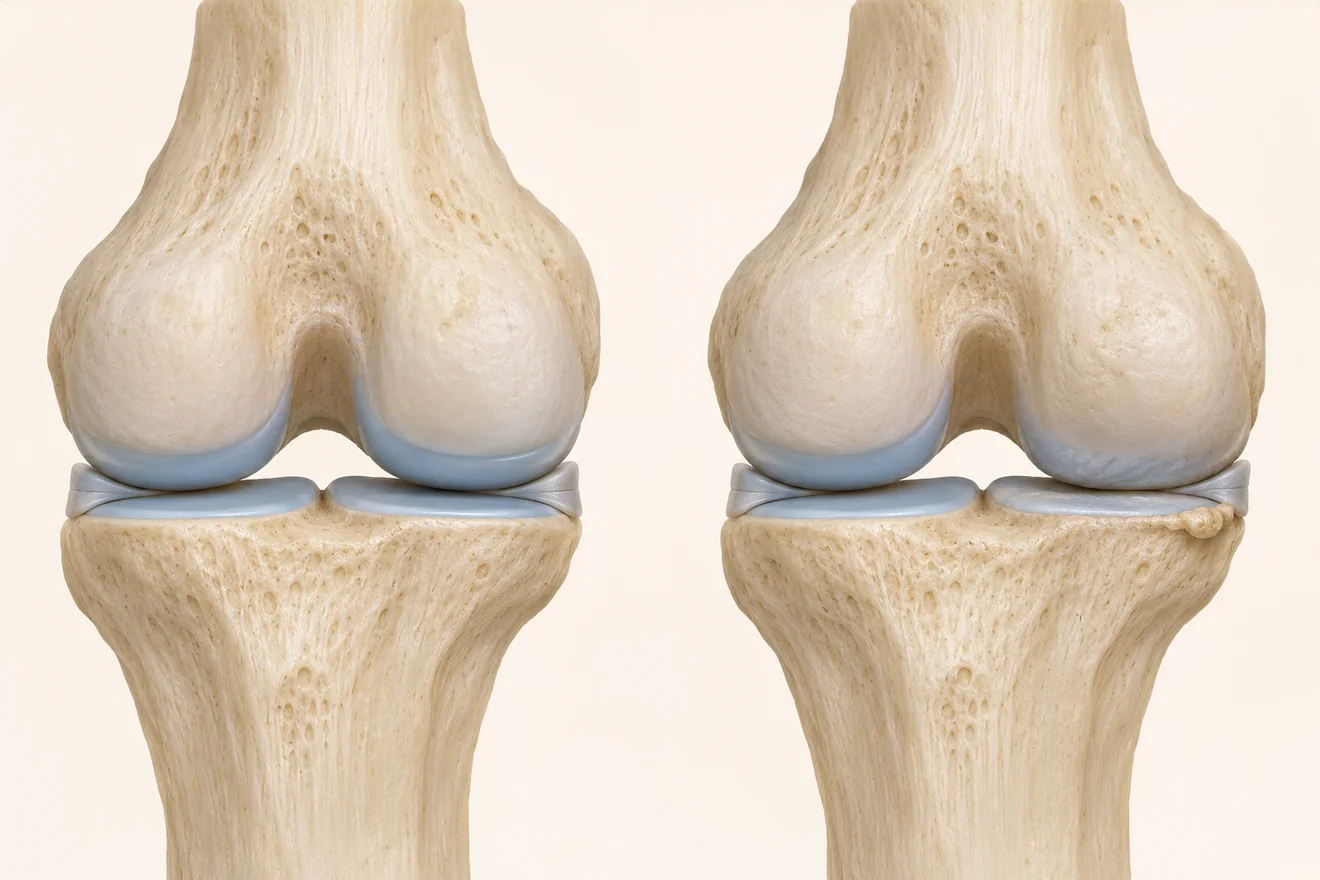
In osteoarthritis, cartilage can thin and small bony spurs can form. An X-ray may show a narrower space between bones. Your care team considers these findings alongside your symptoms and examination.
Learn about osteoarthritis from Arthritis Society CanadaThink of a recent task, which joint bothered you, and how you adapted.

Opening a jar, turning a key or doing up buttons can be useful examples of what’s changed.

Describe how a joint feels when you put on shoes, stand for a while or walk.
Canadian Community Health Survey
20.6% of adults in the ten provinces reported having arthritis in 2023.
Short videos from hospitals and health organizations I trust. Watch at your own pace, and bring your questions to your next visit.

Arthritis Society Canada Canadian source
Video
A physiotherapist explains osteoarthritis and why staying active helps.
Watch on YouTube
Arthritis Society Canada Canadian source
Video
A physiotherapist guides you through exercises for hip and knee osteoarthritis.
Watch on YouTubeThese videos are for general education and do not replace advice from your own doctor. If you have urgent symptoms, call 911 or go to the nearest emergency department.
Prepare for a visit
Pick the joints and symptoms you want to discuss. Selections stay in this tab until reload. After you copy your note, add when it started and one recent example in your own words.
If you have several concerns, ask how to prioritize them or plan another visit.
See what else to bringA primary-care assessment is usually built from your story, an examination and tests only when they are useful for the question being asked.
Discuss onset, joint pattern, morning stiffness, swelling, pain, sleep, work, mobility, previous injury and what you want to get back to doing.
The clinician may look for warmth, swelling, range of motion, strength, tenderness, skin or nail changes and signs outside the joints.
Blood tests, joint fluid, X-ray or ultrasound may be considered depending on the pattern. Imaging findings do not always match pain or function.
The plan may include movement support, symptom relief, follow-up, a rheumatology or orthopaedic referral, or further assessment if the pattern changes.
Referral can be considered when the pattern suggests inflammatory arthritis, persistent synovitis, an unclear systemic condition, difficult-to-control symptoms or a need for disease-modifying treatment. Referral pathways and wait times vary.
Movement is usually part of arthritis care, but the safest starting point depends on the condition, flare pattern, fitness, injury history and goals.
Respect a hot, acutely swollen or injured joint and ask what activity is appropriate while it is assessed.
Break tasks into manageable pieces, alternate activity and rest, and adapt the environment rather than stopping all movement.
Strength, range-of-motion, balance and aerobic activity can support function when progressed gradually and appropriately.
Track function, sleep and flare patterns with your clinician or physiotherapist. Goals can change as your health changes.
A physiotherapist may help with assessment, exercise progression, mobility, balance, education and strategies for work or daily activities. Publicly funded access in Ontario depends on age, program eligibility and the reason for referral.
See Ontario-funded physiotherapy criteriaMedication choice depends on the diagnosis, other health conditions, interactions, pregnancy potential, preferences, coverage and monitoring. No doses are provided here.
Topical anti-inflammatory medicines may be discussed for some localized joint pain. Ask about skin reactions, other medicines and how long to try them.
Acetaminophen or oral anti-inflammatory medicines may be considered in selected situations. Kidney, stomach, heart, blood-pressure and medication risks matter.
Corticosteroid injections or other procedures may be options for selected joints and diagnoses. Benefits, limits and risks vary.
Disease-modifying anti-rheumatic drugs can be important for inflammatory arthritis. They require clinician assessment, monitoring and follow-up.
These may be used for selected inflammatory conditions when specialist assessment and public or private coverage criteria are met.
These are not routine first-line solutions for osteoarthritis. Potential benefits and harms should be discussed carefully, including dependence, sedation and interactions.
Seek urgent assessment for a suddenly hot, very swollen or intensely painful joint, especially with fever or if you feel very unwell.
Seek urgent assessment if you cannot bear weight after an injury or notice a deformed joint, new weakness or numbness, a cold or pale limb, severe allergic symptoms, or rapidly worsening symptoms.
For non-emergency health advice in Ontario, call Health811 at 811.
Coverage depends on the service, eligibility, provider, program and medication plan. Confirm current details before travelling or booking.
Free nurse advice and service navigation in Ontario. Not an emergency service.
Open Health811Eligibility and clinic directory for government-funded physiotherapy.
Review eligibilityEducation, resources, community programs and an information line.
Explore resourcesThese links are for education and visit preparation. Original Albany PDFs should be created only after clinical review.
Arthritis Society Canada flowchart covering assessment, goals and care conversations.
Open the reference PDFPlain-language information about OA, symptoms, diagnosis and management.
Open the reference PDFUse this page's checklist or print it from your browser. No answers are sent to the website.
Open question checklistEligibility, services and fees for government-funded physiotherapy in Ontario.
Open Ontario guidanceCanada is the primary context. United Kingdom, European and United States sources are comparison references, not automatic Ontario rules.
Canadian patient education, osteoarthritis, pain management and support resources.
Open Arthritis Society CanadaOntario quality standard for osteoarthritis care, assessment, function and shared planning.
Open Ontario standardCanadian rheumatology resources and living recommendations for rheumatoid arthritis DMARD care.
Open CRA resourcesFamily-medicine and orthopaedic recommendations about exercise and avoiding low-value knee arthroscopy.
Open Choosing WiselyCanadian family-medicine competencies and osteoarthritis assessment tools.
Open OA toolCanadian PEER chronic-pain guidance for osteoarthritic and neuropathic pain in primary care.
Open PEER guideline PDFCanadian physiotherapy profession and musculoskeletal rehabilitation context.
Open CPA resourceCanadian orthopaedic professional organization and patient-care context.
Open COAUnited Kingdom guidance for osteoarthritis and rheumatoid arthritis. Comparison only.
Open NICE osteoarthritis guidanceEuropean recommendations for physical activity and rheumatic disease management. Comparison only.
Open EULAR recommendationsUnited States osteoarthritis and rheumatoid arthritis clinical practice guidelines. Comparison only.
Open ACR osteoarthritis guidelineOHIP coverage information and government-funded physiotherapy eligibility.
Open OHIP coverageOntario nurse advice and health-service navigation.
Open Health811Kelley and Firestein's Textbook of Rheumatology, current edition. Reference only; edition and access should be verified before clinical publication.
View publisher recordUse Canadian Rheumatology Association and Arthritis Society Canada materials for current, diagnosis-specific review.
Open CRA resourcesSpecialist pathways vary. A family physician or other clinician can explain whether a rheumatology referral is appropriate and how local referral rules apply.
Official clinic information for a Toronto academic rheumatology service. Access, referral and wait times must be confirmed directly.
Open UHN clinic informationPeer-support groups and education for people affected by arthritis. This is not a substitute for diagnosis or treatment.
Open peer-support information